


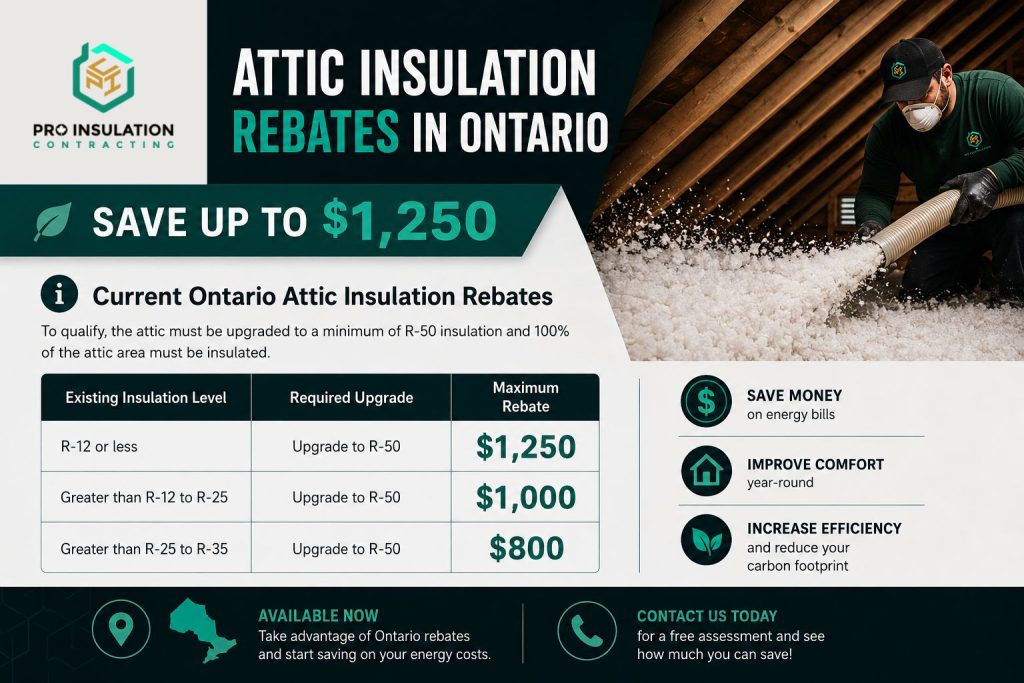
Every fall, the same pattern repeats across Ontario: temperatures drop, gas and hydro bills climb, and homeowners start Googling ways to make their houses hold heat better. Most of that heat loss has a boring, unglamorous cause — old, thin, or settled attic insulation that’s been quietly underperforming for years. The good news is that 2026 is actually a reasonable year to fix it, because there’s a live provincial rebate program covering part of the cost — and many homeowners are either unaware it exists or are working from outdated information about which programs are still open.
A lot of contractor blogs and even some contractor websites are still referencing two rebate programs that are no longer accepting new applicants:
- The Canada Greener Homes Loan (the federal, interest-free loan of up to $40,000) is closed. As of this writing, Natural Resources Canada’s own program page states funding is “fully committed,” and new loan applications cannot be approved. If you already had an approved loan before the closure, you can still use it — but you can’t apply for a new one.
- Enbridge’s original Home Efficiency Rebate closed to new applicants back in February 2024. What’s currently open is Enbridge’s Home Renovation Savings Program, which has been extended through November 2026. It offers two paths for insulation specifically:
- A multi-measure stream, offering up to $7,700 toward insulation improvements as part of a broader energy retrofit
- A standalone attic insulation stream, offering up to $1,250 for attic upgrades on their own, without requiring a full home energy assessment first
What This Means If You’re Planning an Attic Upgrade This Winter
If your attic insulation hasn’t been touched in ten-plus years, or you’ve noticed ice damming, uneven room temperatures, or a heating bill that keeps climbing despite a newer furnace, the standalone attic stream is worth checking first — it’s the lower-friction path since it skips the full assessment requirement.
Before booking anyone, a few things are worth confirming with any insulation contractor you’re considering, rebate-eligible or not:
- Are they a registered participating contractor for the program you’re applying under? Rebate dollars are typically only released if the installer is enrolled — not every local insulation company is.
- Do they measure and report R-value before and after the job, not just “top it up”? Rebate programs generally require documented before/after performance, and a contractor who can’t produce that documentation is a red flag for the rebate claim itself, not just the workmanship.
- Do they explain which insulation type fits your situation — blown-in cellulose, fiberglass, or spray foam — rather than defaulting to whatever they have in stock that week?
This is also where most of the DIY temptation falls apart: rebate programs are built around verified, contractor-installed work, so a DIY attic top-up — however well-intentioned — usually won’t qualify for the incentive dollars at all.
The Bottom Line for This Winter
Ontario’s rebate landscape shifted meaningfully in the last two years — two of the programs most homeowners still think are active are closed, and the one that replaced them works differently. If you’re budgeting for an attic or insulation upgrade before the cold sets in, start by confirming which program is actually live, then bring in a properly registered insulation contractor to do the R-value assessment and installation together — that’s the combination that actually gets rebate dollars approved, not just a warmer attic.